
What Is MSDS for PMU Pigments? A Complete Guide for PMU Academies, Distributors & Private Label Brands
What Is MSDS for PMU Pigments? A Complete Guide for Buyers
If you import PMU pigments, distribute permanent makeup products, or operate a private label brand — MSDS is one of the first documents you should request from your supplier. This guide explains everything you need to know.
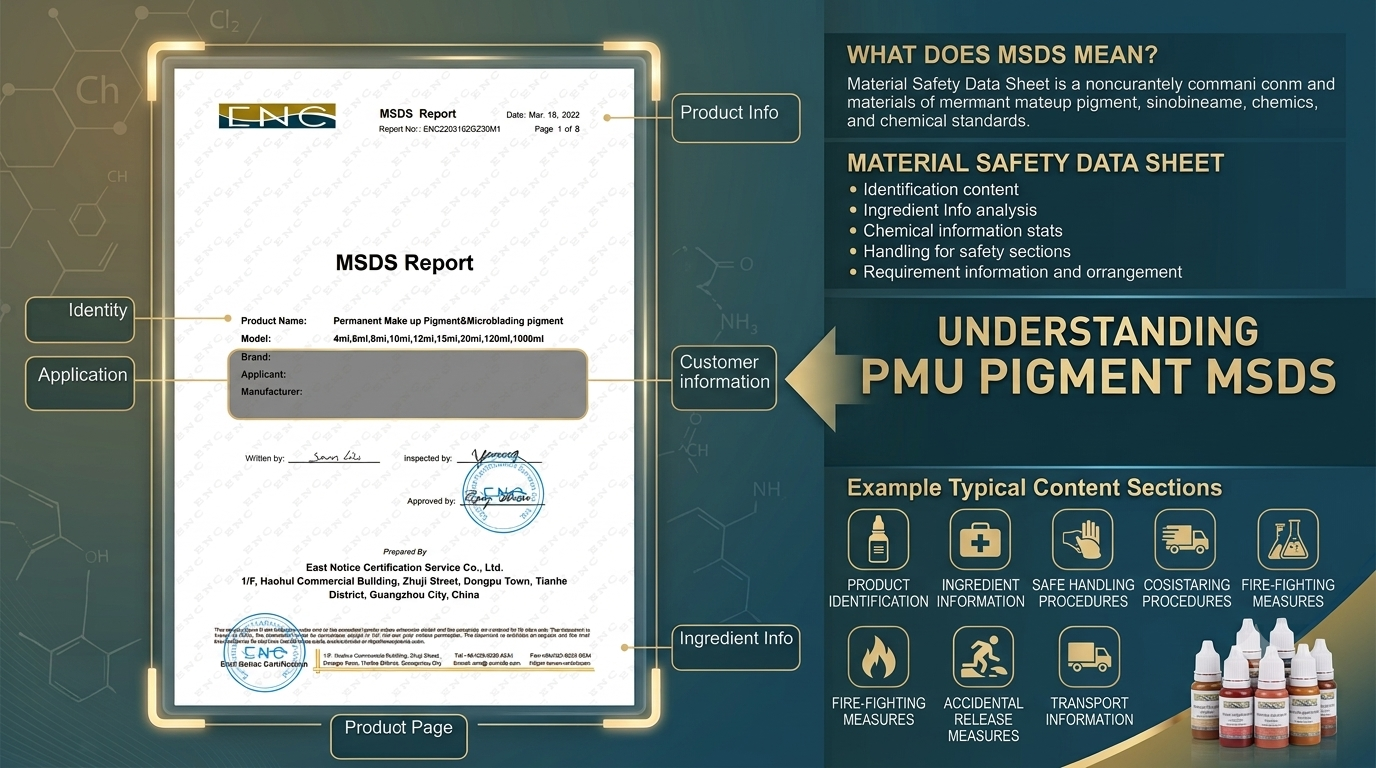
Key Takeaway: An MSDS (Material Safety Data Sheet) is a standardized technical document that provides critical safety and handling information for PMU pigments. Professional buyers — academies, distributors, importers, and OEM brands — routinely request MSDS during supplier evaluation.
What Does MSDS Mean for PMU Pigments?
MSDS stands for Material Safety Data Sheet. It is a technical document prepared for chemical or cosmetic products that explains how the product should be handled safely throughout its lifecycle. For the PMU pigment industry, MSDS is a critical document that helps buyers verify product safety and compliance.
A typical PMU pigment MSDS includes:
- Product identification — manufacturer details, batch codes, product name
- Ingredient information — composition and CAS numbers
- Physical and chemical properties — appearance, pH, solubility
- Safe handling procedures — usage guidelines for artists
- Storage recommendations — temperature, light, and humidity requirements
- Transportation information — shipping classification and restrictions
- First aid measures — emergency response for accidental exposure
- Disposal guidance — environmental precautions
Unlike marketing materials, an MSDS is designed to provide standardized technical information recognized by customs authorities, regulatory bodies, and professional buyers worldwide.
Why Do PMU Pigment Buyers Request MSDS?
Different professional buyers request MSDS documentation for different reasons, but the common thread is risk management and regulatory compliance.
- PMU Academies & Training Schools — MSDS helps educate students about professional product handling, storage, and safety practices as part of their curriculum.
- PMU Pigment Distributors — Distributors need MSDS before introducing a new permanent makeup pigment line into their local market, as retailers and end-users require this documentation.
- Private Label & OEM Brands — OEM customers review MSDS as part of supplier qualification before placing PMU pigment OEM production orders.
- International Importers — Customs authorities in many countries require MSDS documentation for clearance, ensuring smooth import procedures.
Does Every PMU Pigment Series Need Its Own MSDS?
In professional manufacturing, MSDS documentation is typically prepared for individual product series or color groups according to the manufacturer's documentation system. Buyers should request the corresponding MSDS for the specific pigment series being purchased.
Documentation may differ between these product categories:
- Hybrid PMU Pigments — organic + inorganic blend for versatile application
- Powder PMU Pigments — powder-based hybrid formulas for soft brows
- Skin Camouflage Pigments — skin-tone matched formulations for scar coverage
- Cream Microblading Pigments — semi-cream consistency for hair strokes
- Nano Organic PMU Pigments — water-based organic liquids for machine use
Obtaining the correct MSDS for your specific series ensures accurate technical information and smoother regulatory compliance across different markets.
MSDS vs Product Performance: Understanding the Difference
An important distinction that every buyer should understand: MSDS is a safety and handling document, not a performance evaluation. While MSDS provides essential technical data, product performance depends on different factors entirely.
Healed color results, color stability, and implantation behavior are influenced by:
- Pigment formulation and particle size
- Application technique and implantation depth
- Client skin type, lifestyle, and aftercare routine
- Needle configuration and machine settings
Professional buyers evaluate both technical documentation AND product testing before making purchasing decisions. A reliable PMU pigment supplier provides comprehensive support on both fronts.
How CharmingTattoo Supports Professional PMU Pigment Buyers
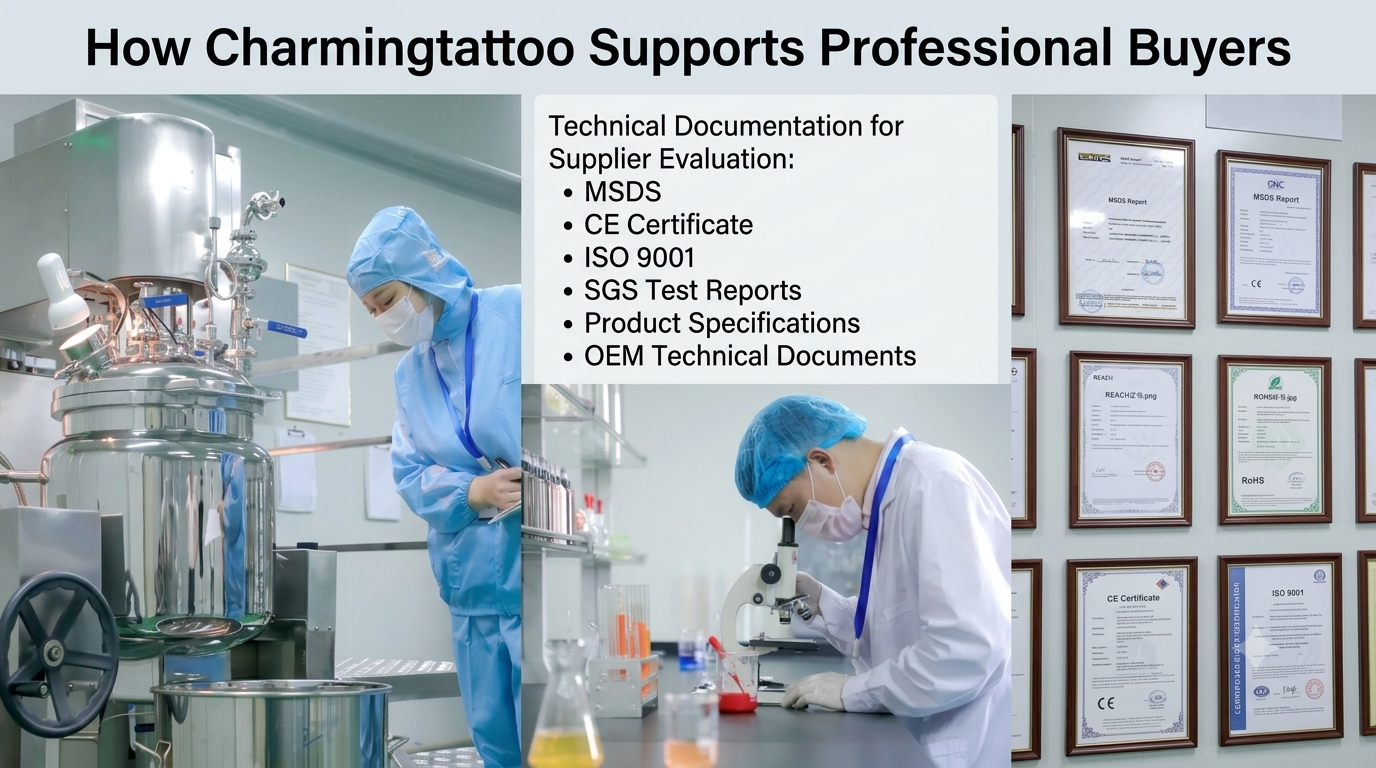
At CharmingTattoo PMU Manufacture, we work with PMU academies, distributors, wholesalers, and private label brands worldwide. With 22+ years of PMU pigment manufacturing experience, we provide comprehensive technical documentation to support supplier evaluation and purchasing decisions.
Our certification package — MSDS, CE, ISO 9001, SGS, REACH, FDA registration, and gamma sterilization — is among the most comprehensive offered by any PMU pigment manufacturer, covering major global market requirements.
Frequently Asked Questions About MSDS for PMU Pigments
1. Can I request an MSDS before placing a PMU pigment order?
Yes. Technical documentation can be shared during the supplier evaluation process. Contact our sales team with your specific product interests.
2. Is MSDS available for every CharmingTattoo pigment series?
Documentation availability depends on the specific product series. Contact us for the corresponding technical files for your target products.
3. Does MSDS replace product testing?
No. An MSDS provides technical and safety information but does not replace practical product evaluation or skin testing.
4. Why do OEM private label customers always request MSDS?
Because technical documentation is commonly required for supplier qualification, product registration, import customs clearance, and internal quality management procedures.
5. What other certifications do CharmingTattoo PMU pigments carry?
In addition to MSDS, our permanent makeup pigments are certified with CE, FDA, REACH, ISO 9001, SGS, ResAP 2008, and gamma sterilization — covering all major global market requirements.
Make an Informed Choice
An MSDS is one of the most important technical documents professional PMU buyers should request before purchasing pigments. While it does not measure product performance, it provides standardized information that supports safe handling, storage, transportation, and supplier evaluation.
For PMU academies, distributors, importers, and private label brands, reviewing the appropriate documentation before placing an order is an important step toward building a reliable long-term partnership.
Request MSDS & Product Documentation → | Explore Full PMU Pigment Range →
Related Reading
Interested in learning more about PMU pigment sourcing? Check out these related guides: